

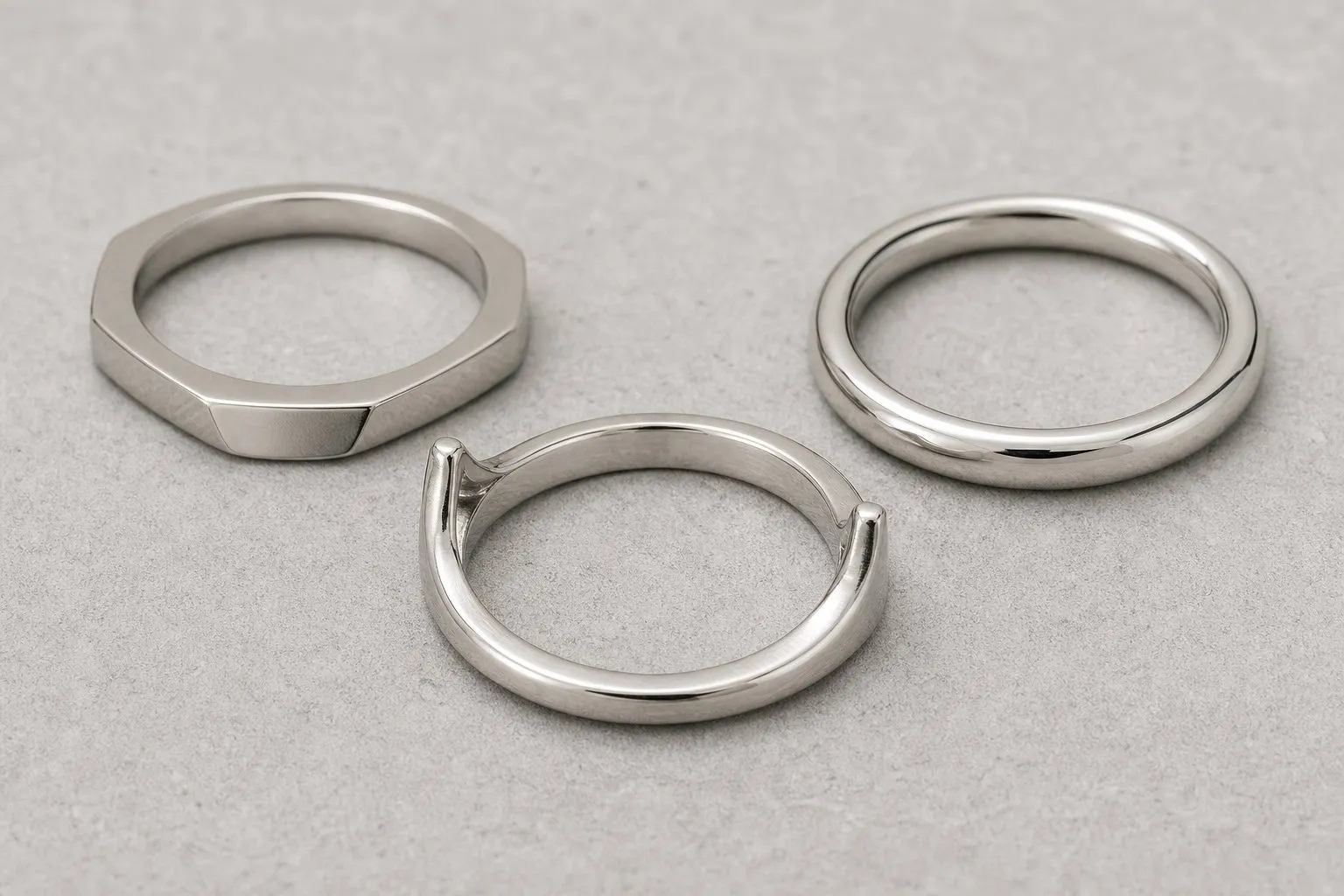
The engagement ring band styles in ordinary use are the plain shank, pavé, channel, bar, cathedral, trellis, split shank, twisted and hidden halo, and what separates them is not how they look but what each does to resizing, catching, upkeep and the wedding band beside it. Most guides stop at the adjectives, while GIA publishes which styles are hard to resize, which catch on clothing and which collect dirt, and this page is built from that.
What is on this page7 sections
Key Takeaways
- GIA says channel-set, bar-set and pavé-set bands can all be more difficult to resize, especially where the stones extend far around the band.
- GIA says a cathedral’s elevated structure may be more likely to catch on clothing, while the arched supports can provide additional stability.
- GIA says tension-set rings can be very difficult, and sometimes impossible, to resize.
- GIA says pavé may require occasional maintenance to keep the stones secure, and that a halo can collect dirt more easily.
- Brilliant Earth says a hidden halo may raise the center diamond slightly higher, which can affect how flush a wedding band sits.
What a Band Style Changes After the Wedding
The band is what a jeweler must cut, stretch, polish or plate for the rest of the ring’s life, so the style decides what stays possible later. Buying a woman’s wedding band as its own ring is a different question.
| Band style | What it does in use | Resizing | Who published it |
|---|---|---|---|
| Plain shank (solitaire band) | Nothing set into the band, so the bottom of the shank stays available for bench work | The straightforward case: generally up or down about two sizes | Brilliant Earth, What to Do if Your Ring Is Too Big |
| Pavé | Small stones held by tiny beads or prongs; may require occasional maintenance to keep the stones secure | More difficult, since adjusting the ring may disturb the small stones | GIA 4Cs settings guide; With Clarity |
| Channel | Stones sit between two parallel metal walls, less exposed and less likely to catch than prong-set accents | Difficult, especially if the stones extend far around the band | GIA 4Cs settings guide |
| Bar set | More exposed than channel and may be slightly more vulnerable to impact or chipping | More difficult, especially if the stones extend far around the band | GIA 4Cs settings guide |
| Cathedral | Arches rise from the shank to the center setting; may be more likely to catch on clothing, while the arches can add stability, and the height can give a wedding band clearance | Not published | GIA 4Cs settings guide; Nekta New York on the clearance |
| Trellis | Overlapping metalwork means it may require more frequent cleaning | Not published | GIA 4Cs settings guide |
| Split shank | No consequence published by any source we found. Brilliant Earth, a retailer, recommends split shank styles for slim fingers, which is an aesthetic recommendation | Not published | Brilliant Earth (aesthetic recommendation only) |
| Twisted or braided | No consequence published by any source we found | No consequence published by any source we found | Not published |
| Hidden halo | May raise the center diamond slightly higher, which can affect how flush a wedding band sits; a halo can collect dirt more easily | Not published | Brilliant Earth; GIA 4Cs settings guide |
| Tension | Suspends the stone between the open ends of the band | Can be very difficult, and sometimes impossible | GIA 4Cs settings guide |
Bezel is a different mechanism: how a bezel holds the stone instead.
The Shank Is What Gets Cut in a Resize
With Clarity, a retailer, says resizing cuts are made at the bottom of the band, usually the part under the most stress, and that the cut and soldered area stays weaker than the rest of the ring. Brilliant Earth says rings can generally go up or down about two sizes before the structure and design may be compromised. Stones at the bottom of the shank remove the place the jeweler works: what a resize actually costs.
Width Changes How the Ring Fits, Not Just How It Looks
Brilliant Earth puts band widths at 1mm to 8mm, says there is no single best width, and names 1.5mm to 2.5mm as the most popular engagement ring widths in its 2026 guide. It also says a wider band feels tighter than a narrower band in the same ring size and may need half a size up, and GIA said in 2018 that rings with wide shanks usually need to be a bit larger. Measure the size before choosing a width.
Set Bands: Pavé, Channel and Bar
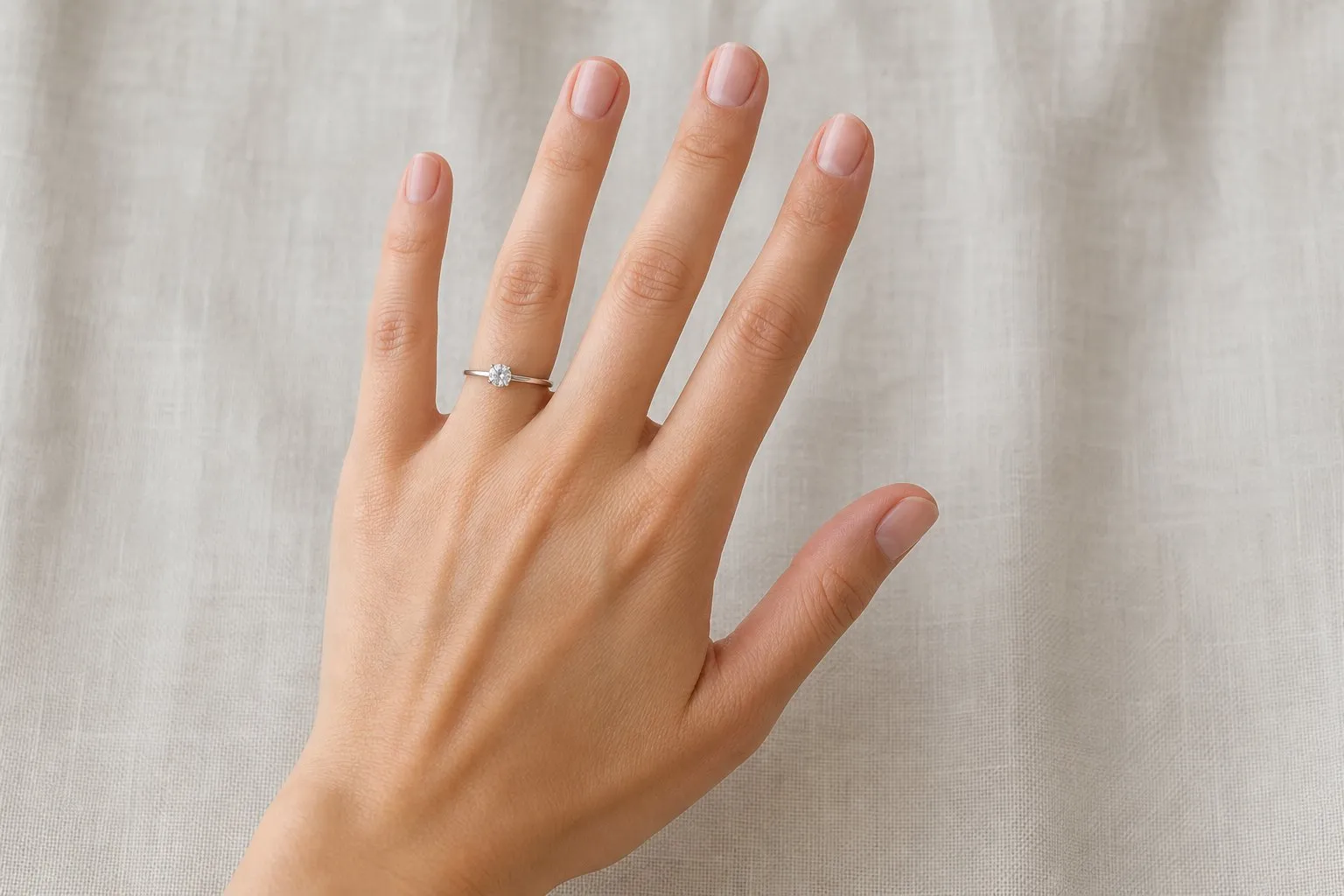
These three put stones into the band itself, and GIA publishes a different trade-off for each. All three shorten what a jeweler can do later.
Pavé: Sparkle That Needs Checking
GIA says pavé sets small gemstones closely together for a continuous surface of sparkle, held by tiny beads or prongs, and may require occasional maintenance to keep the stones secure. Resizing is harder too, GIA says, since adjusting the ring may disturb the small stones. With Clarity, a retailer, puts the chance of losing a side stone as low but present. Upkeep, not method: cleaning a set band without loosening it.
Channel and Bar: Least Likely to Catch, Hardest to Size
GIA says channel-set stones sit between two parallel metal walls, less exposed and less likely to catch on clothing than prong-set accents, which makes channel the lowest snag risk of the set styles. The price is sizing: GIA says channel-set rings can be difficult to resize, especially if the stones extend far around the band. Bar set trades the same sizing for more exposure, since GIA says bar-set stones are more exposed than channel and may be slightly more vulnerable to impact or chipping.
Shaped Shanks: Cathedral, Trellis and Split Shank
These styles shape the metal instead of filling it with stones, and what is published about them concerns height and cleaning, not resizing.
Cathedral: Height, Stability and Snagging in One Style
GIA’s own caveat about a cathedral setting is that “the elevated structure may also be more likely to catch on clothing or objects, although the arched supports can provide additional stability for the center setting.” Nekta New York, a retailer, adds that a cathedral can provide the clearance a wedding band needs under a high setting.
Trellis and Split Shank: What Is and Is Not Published
GIA says a trellis setting may require more frequent cleaning, because of the overlapping metalwork. For split shank the only named material we found is Brilliant Earth, a retailer, recommending split shank styles for slim fingers, an aesthetic recommendation rather than a consequence. No named source we found publishes a resizing, catching or upkeep consequence for a twisted or braided shank, so this page publishes none and the table says so.
The Wedding Band That Has to Sit Next to It
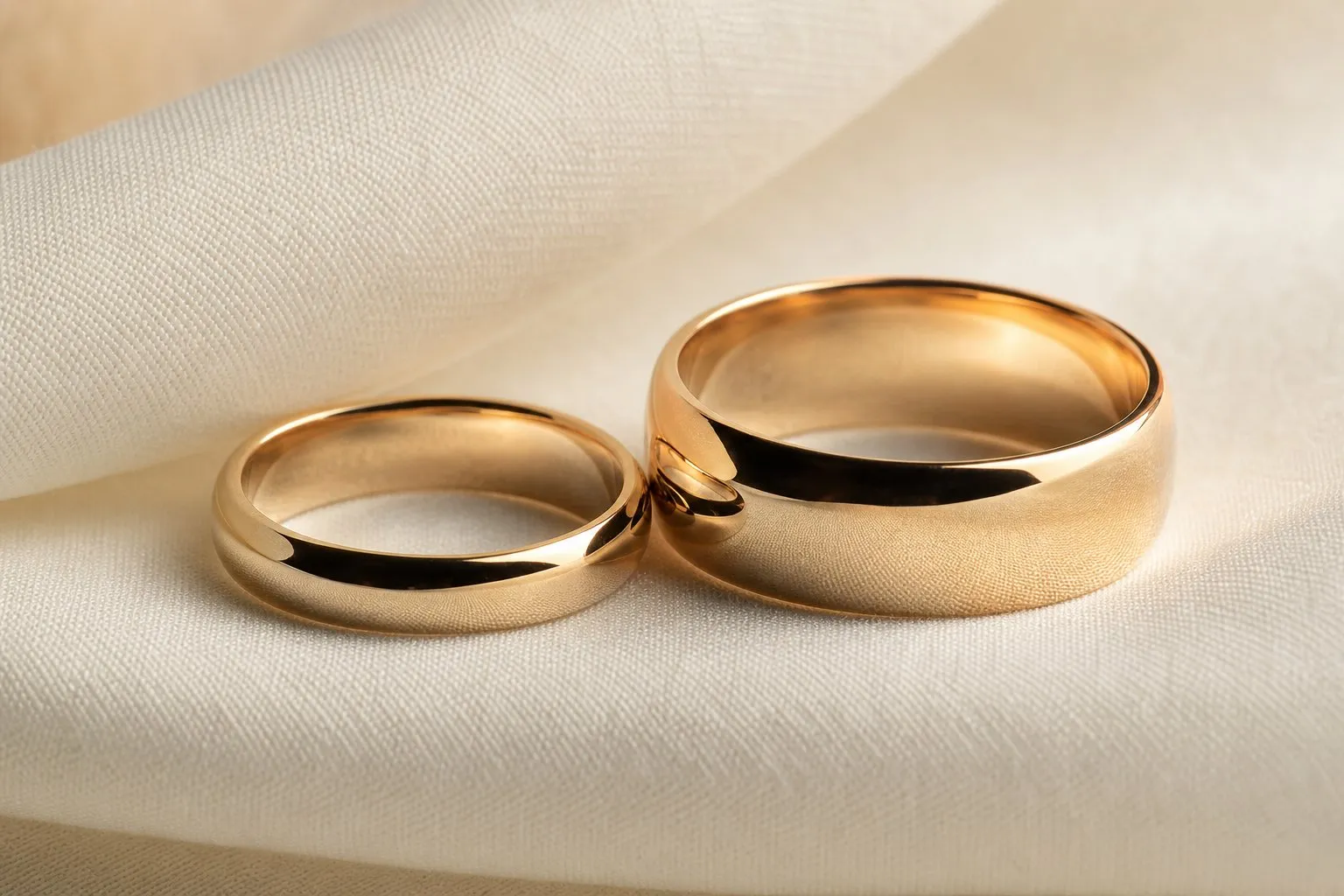
Band style decides whether a second ring can ever sit flush, the consequence people meet last and can least change. Our shaped-band pages hold the options: bands for a round solitaire, bands that clear a halo, bands shaped for an oval and bands shaped for a pear.
| What is true of your ring or your plans | What that argues for | The published reason |
|---|---|---|
| Your finger size changes, or you expect to resize later | A plain shank, or stones kept off the bottom of the band | The resizing cut is made at the bottom of the band, and pavé, channel and bar bands are all harder to resize (With Clarity; GIA) |
| You work with your hands or wear gloves | Channel over pavé or bar, and think twice about a cathedral | Channel-set stones are less exposed and less likely to catch; a cathedral’s elevated structure may be more likely to catch on clothing (GIA) |
| You want a plain band to sit flush against it later | Check the setting height before buying, and look at the shaped bands for your stone shape | Most standard bands hit the bottom edge of a high setting before they can sit flush1 |
| You chose a hidden halo | Plan the wedding band with the engagement ring, not after it | A hidden halo may raise the center diamond slightly higher, which can affect how flush a band sits2 |
| You do not want a ring that needs checking | Fewer small stones in the band | Pavé may require occasional maintenance to keep the stones secure, and prongs should be checked occasionally (GIA) |
| The shank is rhodium-plated white gold | Budget for replating as part of owning the style, whatever the style is | Rhodium plating wears away gradually and the ring must be replated occasionally3 |
3 sources cited in this table
A Hidden Halo Raises the Stone
Brilliant Earth describes a hidden halo as a circle of small diamonds set just beneath the center gemstone, around the base of the prongs. It may raise the center diamond slightly higher to accommodate the side-set gemstones, which enhances light exposure but can affect how flush a wedding band sits. GIA adds that a halo may require more maintenance to keep its stones secure and clean, and can collect dirt more easily.
When a Straight Band Will Not Sit Flush
Nekta New York says halos are usually set high above the finger, so most standard wedding bands hit the bottom edge of that setting before they can sit flush, while a notch cut into the band lets it slide under part of it. With Clarity says a gap is not only cosmetic: it can cause discomfort, snagging or damage over time and lets dirt accumulate. Our bands notched for a princess cut page carries the options per shape.
Frequently Asked Questions
What Engagement Ring Styles Are Trending Now?
We could not find a named source that publishes a popularity ranking of engagement ring band styles, so this page does not claim one. The only dated popularity figure we hold is Brilliant Earth’s 2026 statement of the most popular widths, which ranks widths and not styles.
What Is the Most Classy Engagement Ring Style?
No source we found ranks band styles by class, so the honest answer is by consequence. A plain shank keeps the bottom of the band free for a jeweler, channel-set stones catch least of the set styles, and a cathedral buys height at the cost of snagging, per GIA.
What Is the Least Popular Engagement Ring Shape?
That is a question about the stone, not the band, and it belongs to a different guide. Shape popularity, which shapes look larger and which have points that can chip all live with stone shapes compared. This page stays with the metal.
What Is the 3 Month Ring Rule?
The 3-month rule is the idea that an engagement ring should cost about three months’ salary. Brilliant Earth traces it to a 1930s De Beers campaign that suggested one month’s salary, says it became a 2-to-3-months rule by the 1980s, and calls it outdated.
How Much Should I Spend on an Engagement Ring if I Make $100,000 a Year?
Band style cannot answer a salary question, and the band is a poor place to hunt for savings: the style you pick changes resizing, upkeep and whether a wedding band ever sits flush. For the spending question, see how much couples actually spend.
Sources
- GIA 4Cs, Complete Guide to Engagement Ring Settings: Types vs. Styles, 2026.
- GIA 4Cs, Ring Size Guide: Tips and Ring Size Chart, 2018.
- GIA 4Cs, Choosing Between White Gold, Platinum, Palladium, and Silver, 2015.
- Brilliant Earth, Halo vs. Hidden Halo, 2026.
- Brilliant Earth, Ring Width Guide, 2026.
- Brilliant Earth, What to Do if Your Ring Is Too Big, 2026.
- Brilliant Earth, How to Choose the Best Engagement Ring to Suit Your Hand Type, 2026.
- Brilliant Earth, What Is the 3-Month Salary Rule?, page dated 5 August 2026.
- With Clarity, Here’s What You Need to Know Before Buying a Pave Setting, 2024.
- With Clarity, Ring Resizing Demystified: The Complete Guide You Need, 2024.
- With Clarity, How do you find a flushed-fit wedding band for your hidden halo engagement ring?, 2025.
- Nekta New York, Why Some Wedding Bands Never Sit Flush with Halo Rings, 2025.