

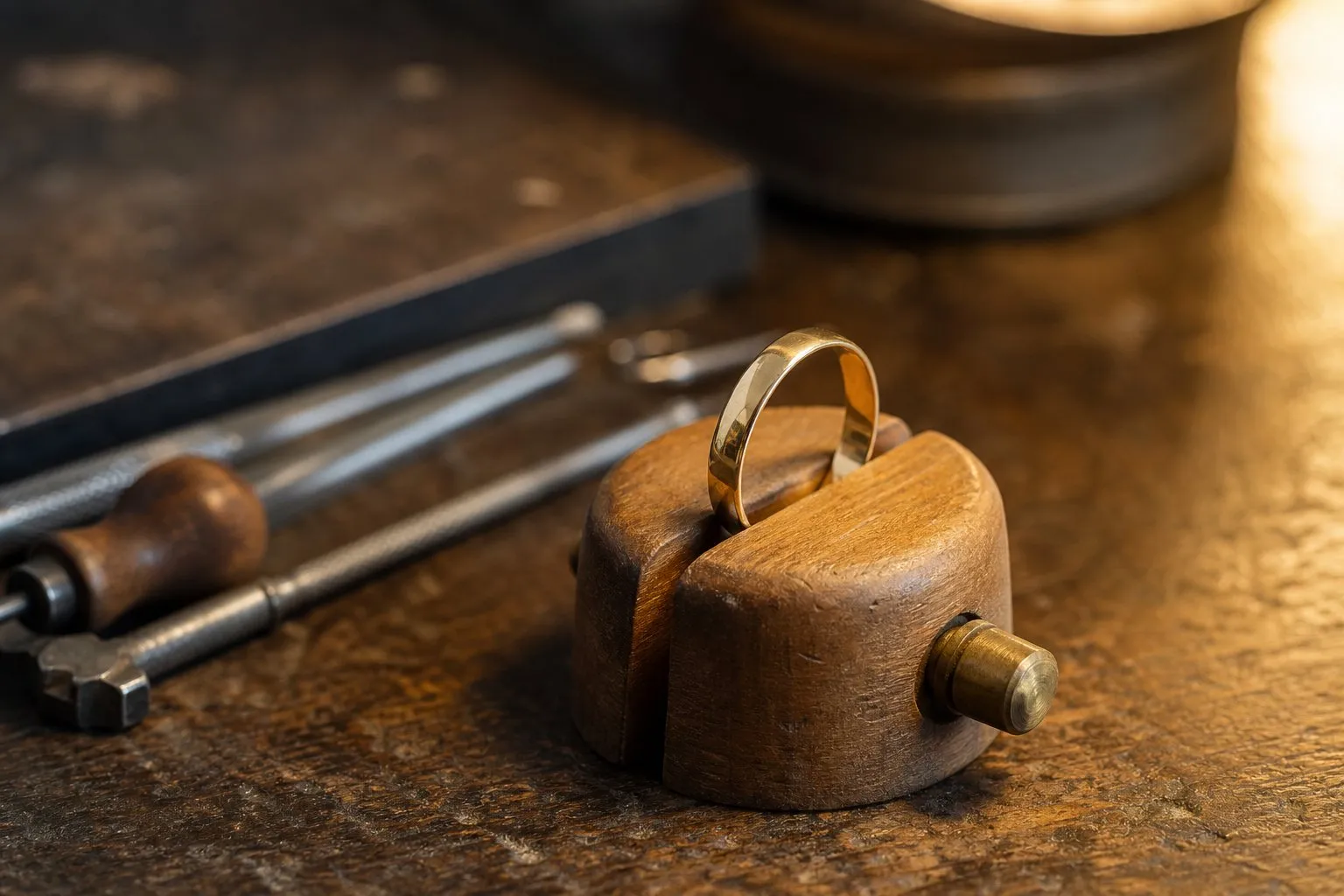
Ring sizing beads are small metal beads a jeweler solders inside the band, on either side of the shank, to take up the slack and stop a ring spinning on a finger the band already clears easily. Almost everything published about how they behave comes from someone who sells them, so every claim below carries the name of whoever published it, and where no named source publishes a figure this page says so instead of inventing one.
What is on this page8 sections
Key Takeaways
- Alan Revere, a bench-jeweler educator on Ganoksin, describes how beads are fitted, and Jewelers Mutual Group, an insurer, publishes size figures; no bench-jeweler association or technical body turned up.
- Wikipedia’s ring size article, our other non-seller description, carries an original research maintenance banner, so it is an article, not an authority.
- Jewelers Mutual Group puts beads at about half a size; nobody we can name publishes what they cost or whether they can be taken out later.
- Resizing down is the one option with published figures behind it, and Brilliant Earth and KAY both put the limit at about two sizes.
- Beads, a sizing bar and a wrap all shrink the opening the finger must pass, which matters because a tight ring, not a loose one, is the emergency.
What Are Ring Sizing Beads?
Beads are the jeweler’s answer to a ring that slides over the knuckle easily and then turns at the base of the finger, so they address the gap between two parts of one finger, not a ring that is simply too large.
What the Sources Actually Say
The Wikipedia article on ring size describes sizing beads as small metal beads added to the inside of a ring, used to reduce its effective diameter, keep it from spinning for wearers whose knuckles are much larger than the finger base, and counterbalance top-heavy rings, usually made of the same metal as the ring. That is Wikipedia’s description in full; the bench procedure comes from Alan Revere, below.
Who Publishes These Claims, and Who Does Not
Alan Revere, a bench-jeweler educator, sets out on Ganoksin how the job is done at the bench: the ring is first enlarged by about a quarter size, then two small gold beads are soldered inside the shank at roughly the 5 and 7 o’clock positions. Jewelers Mutual Group, a jewelry insurer, publishes size figures for three fixes. We read both on 12/09/2026. Neither recommends beads, and neither is the bench-jeweler association or technical body we looked for and did not find; what our search turned up first were retailer and manufacturer blogs, two of them top results and both selling beads. None of that is proof that no independent source exists.
When a Jeweler Suggests Them
GIA states that for most people the joint is larger than the rest of the finger, so measuring only where the ring sits can give a size that will not push over the joint. A ring bought to clear the joint has room to spare at the base, and if the gap is large GIA describes sizing beads and hinged shanks as the jeweler’s answers. That is the case behind our guide to rings for a knuckle wider than the finger base.
How to Make a Ring Fit Tighter Without Resizing
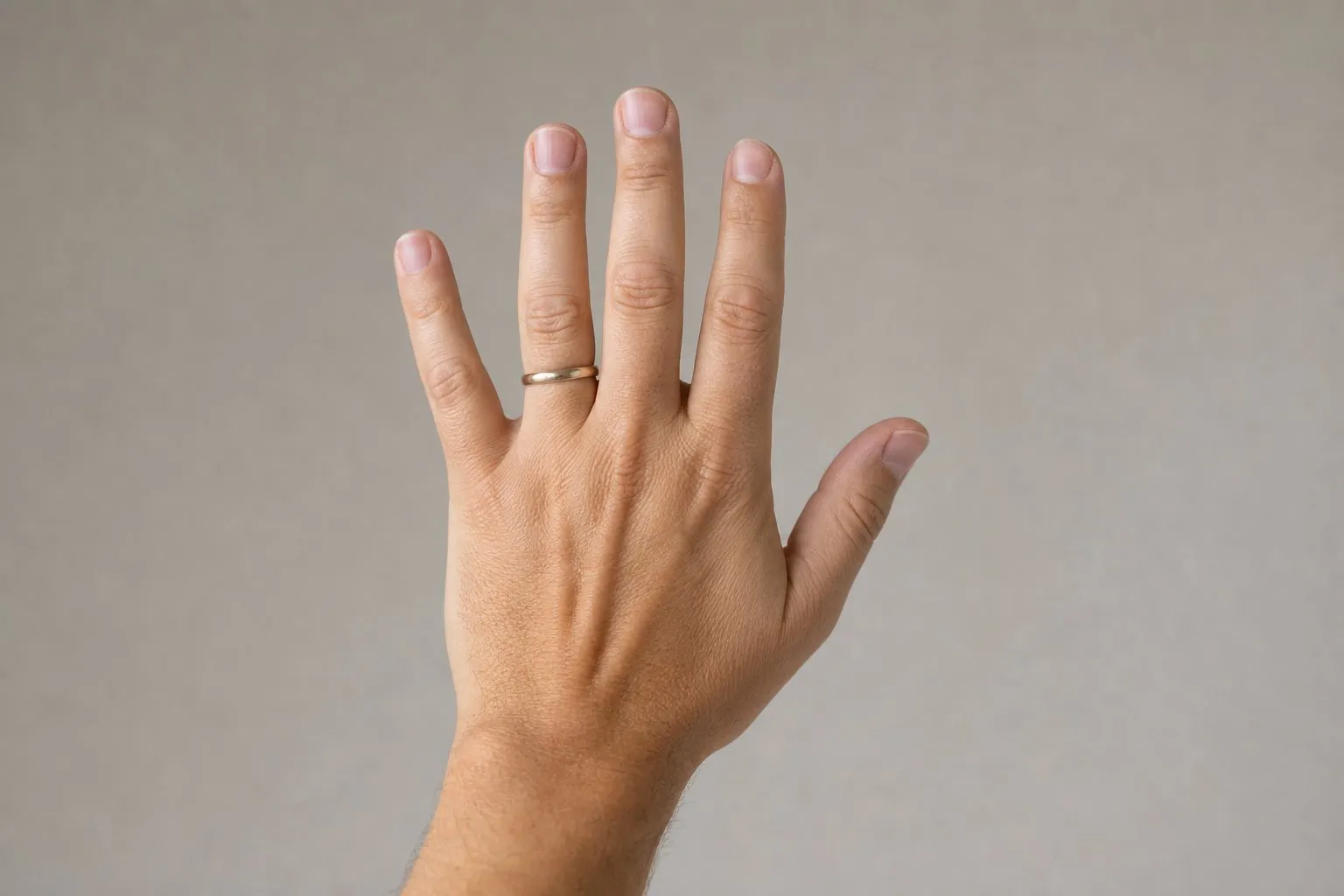
If you are asking how to make a ring fit tighter, the non-permanent answers come first, because how to make a ring smaller without resizing is a different question from cutting metal out of the shank.
What a Jeweler Can Add to the Band
Three things get added to the shank itself: sizing beads; a sizing bar or hinged shank, the option GIA names alongside beads when the knuckle is much wider than the base of the finger; and a spring insert. Jewelers Mutual Group (01/08/2024), an insurer rather than a seller, describes the spring insert as a horseshoe-shaped strip lining the bottom three-quarters of the band’s inside, springing open over the knuckle and back at the base, worth up to one full ring size. Its fold-over version of the sizing bar is a U-shaped bar soldered across the bottom of the ring, hinged one side and latched the other, and it says a ring can go several full sizes smaller that way. All three narrow the inside of the band, so all three reduce the opening the finger must pass; see how to get a ring off a swollen finger. No source we could name publishes what any of them costs.
Devices Worn With the Ring
The other family is worn with the ring instead of altering it. Brilliant Earth publishes ring guards as a temporary way to hold two rings together without soldering, spacer bands as thin bands worn between rings to reduce friction and movement, and ring jackets as decorative rings that encase both and keep them in place. Fox Fine Jewelry describes a ring guard as a band shaped to sit around the engagement ring. None of those sources presents any of them as a way to tighten a single loose ring, which is how the term is used online. For the fold-over clips and wraps sold to slip around a band we found no named source, and a marketplace listing is not a source; the fold-over device Jewelers Mutual describes is soldered on at the bench, a different thing.
Every Option for a Loose Ring, Compared
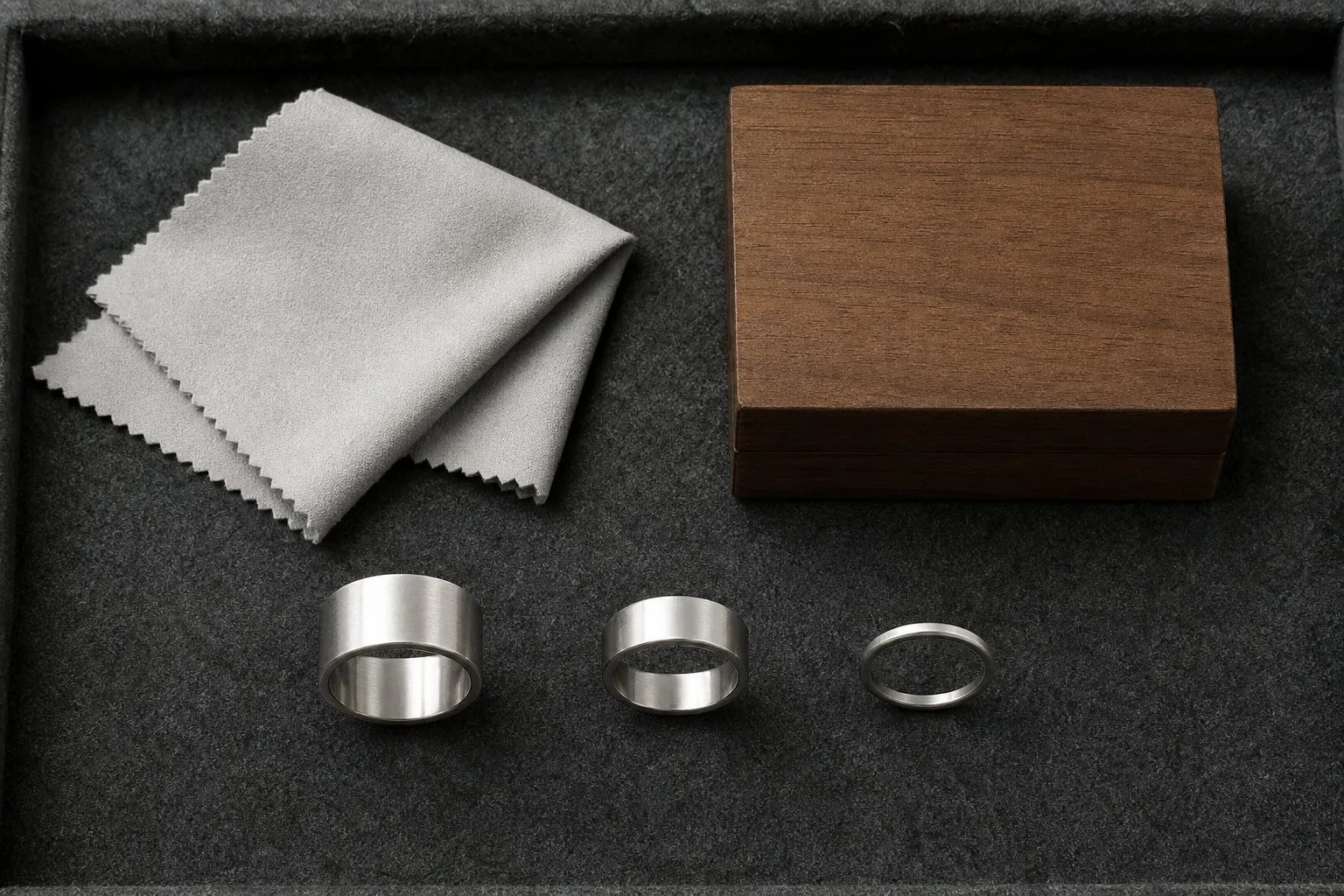
Seven options for the same complaint, side by side. The last column is the point: it names whoever published each claim, and two cells still say that nobody we could name did.
| Option | What it does | Reversible? | Who publishes the claim |
|---|---|---|---|
| Sizing beads | Small metal beads added inside the band to reduce its effective diameter and stop it spinning, usually in the ring’s own metal | Not established by any source we could name; ask the jeweler doing the work | Wikipedia’s ring size article, a non-seller description; Alan Revere, bench-jeweler educator, on Ganoksin for the bench method, read 12/09/2026; Jewelers Mutual Group, 01/08/2024, for about half a size; GIA names beads in one clause |
| Sizing bar or hinged shank | A bar or hinge fitted into the shank so the band can pass a wide knuckle and then close smaller | Not established by any source we could name | GIA names hinged shanks alongside beads for a knuckle wider than the base; Jewelers Mutual Group, 01/08/2024, puts the soldered fold-over version at several full sizes smaller |
| Spring insert | A horseshoe-shaped strip lining the bottom three-quarters of the band’s inside, springing open over the knuckle and back at the base | Not published | Jewelers Mutual Group, 01/08/2024, an insurer rather than a seller of the fix: up to one full ring size |
| Fold-over adjuster or ring wrap, the clip-on kind | Sold as a clip or wrap fitted around the band to take up slack, not the soldered bar above | Comes off, since it is not attached to the ring | Not publishedmarketplace listings rank for this term and a listing is not a source |
| Ring guard | A band shaped to sit around the engagement ring; published as a way to hold two rings together, not as a way to tighten one | Yesit is worn rather than fitted | Brilliant Earth (temporary, holds rings together without soldering) and Fox Fine Jewelry (a band shaped to sit around the ring) |
| Resizing down | Metal is cut out of the shank and the band is closed smaller | Noit is permanent | Brilliant Earth ($50 to $200 on average, up to two weeks, about two sizes) and KAY (two sizes up or down) |
| Home fixes such as tape or thread | Add bulk inside the band without altering it | Yesthey come off | Not publishedthey also change how easily the ring comes off |
Reversible Against Permanent
One distinction decides most of this. Cutting metal out of a shank is permanent, and a device worn around the band is not, because it comes off when you want it off. Beads sit between the two, because we cannot name a source for whether they can be taken out again later. Sellers commonly say they can. Until a source we can point to says the same, ask the jeweler first.
What Nobody Publishes
Two gaps are left. What it costs to add beads: no source we could name and quote publishes a price. Whether beads can be removed later: the same answer again. The third gap, how much smaller beads make a ring, now has one figure behind it, from an insurer rather than a bench. Brilliant Earth does publish an average range for resizing in general, quoted below, and it belongs to cutting and closing a shank, not to beads.
Resizing the Ring Down Instead
Resizing is the permanent option, and the only one here with published figures behind it, attached to named sellers who do the job and stand by the numbers.
What It Costs and How Long It Takes
Brilliant Earth (2026) puts resizing at $50 to $200 on average and says the process will generally take up to two weeks. Both are the retailer’s own numbers, and an average is not a quote for your ring: the metal, the setting and the work decide what you pay. Ask for the price and turnaround in writing first.
The Two-Size Limit
Brilliant Earth writes that rings can generally be sized up or down by about two sizes, that beyond that the structure and design may be compromised, and that for a significant change the ring may be better remade entirely. KAY publishes the same limit as policy: it resizes only two sizes up or down, and says material and design may affect whether a ring can be resized at all. Two sellers, one limit, both named.
Rings and Metals That Cannot Be Resized
GIA’s everyday-wear table lists gold and sterling silver as resizable up to two sizes, platinum as expensive to resize, titanium as limited to half a size and tungsten as not resizable, which reads well next to which metals can be resized and which cannot and tungsten wedding bands. GIA adds that pavé and channel settings cannot be resized easily and eternity rings can be very difficult. Espling Jewelers explains why for a full eternity band: there is no bare metal to cut, adjusting one can disrupt the setting, and a too-tight one can really only be remade larger. Blue Nile cannot resize eternity rings with a set number of stones, milgrain or ornate bands, silver or alternative metals such as tungsten, offering a 30-day exchange instead.
Loose or Tight: Which Risk You Are Choosing
The two failures are not symmetrical. A ring that is too loose can cost you the ring; a ring that is too tight can cost you a good deal more, and only one of them has an emergency medicine literature behind it.
| Your situation | What to do first | Why |
|---|---|---|
| The ring spins but clears the knuckle easily | Ask a jeweler about beads or a bar before resizing | That gap is the case GIA describes for beads and hinged shanks |
| The ring only feels loose on cold mornings | Wait and measure again before paying for anything | Finger size changes with activity, hydration, temperature and diet1 |
| The ring is a full size or more too big | Price a resize, not a device | Rings can generally be sized about two sizes, and beyond that remaking may be better1 |
| It is a full eternity band | Ask about an exchange or remaking it, not a resize | There is no bare metal to cut, and adjusting it can disrupt the setting2 |
| It is tungsten, titanium or silver | Check the seller’s exchange terms first | GIA: titanium is limited to half a size and tungsten cannot be resized; Blue Nile exchanges these instead |
| It is pavé or channel set | Expect a jeweler to say no or to charge more | Pavé and channel settings cannot be resized easily (GIA) |
| You work with your hands and need the ring off fast | Do not tighten it with anything fitted inside the band | Beads, a bar and a wrap all shrink the opening the finger must pass through |
| The ring is tight, not loose, and the finger is swelling | Treat it as urgent, not as a sizing problem | Swelling is the most common reason for ring removal and a ring can act as a tourniquet3 |
3 sources cited in this table
A Loose Ring Comes Off
The loss risk has a sourced statement behind it, from a seller: Brilliant Earth writes that soldering keeps rings in place and reduces the chance of accidental loss, because a soldered set has more weight and stability on the finger and is less likely to slip off. Blue Nile’s fit test is snug enough to stay in place yet loose enough to slide over the knuckle with ease. Brilliant Earth adds that finger size changes with activity, hydration, temperature and diet, so measure the finger first with our ring sizer and see turning a measurement into a size.
A Tight Ring Is the Emergency
Moser and colleagues (2016) report that the most common reason for ring removal is swelling, when rings can have a painful tourniquet effect on digits. Asher and colleagues (2020) describe the inability to remove a ring as a common presentation to Emergency Departments, with a tourniquet effect that strangulates the tissue and favors early removal, and state that in strangulation emergent specialist referral is indicated. The American Society for Surgery of the Hand publishes a three-step method for a stuck ring, set out in how to get a ring off a swollen finger.
Nothing Here Should Make a Ring Hard to Remove Without You Knowing
Beads, a sizing bar and a wrap all reduce the opening the finger must pass. The inside of the band gets smaller, so the ring moves less, and it follows that a ring tightened any of those ways is harder to get off than it was, a trade to make knowingly rather than to find out later. A ring that must come off quickly is a different problem from a ring that spins, and it is covered in the emergency case for getting a ring off.
Frequently Asked Questions
What are sizing beads in a ring?
Sizing beads are small metal beads a jeweler attaches inside the band, usually in the ring’s own metal, so the inside of the ring is effectively narrower and the ring turns less. The description we hold comes from Wikipedia’s ring size article, and Alan Revere sets out on Ganoksin how a jeweler fits them.
How much does it cost to add sizing beads to a ring?
No source we can name and quote publishes a price for adding sizing beads, so there is no honest average to give here. The one published range we hold covers cutting and closing a shank, and it belongs to that job alone. Ask the jeweler who would do the work for a written quote.
Are ring sizing beads uncomfortable?
No independent source we found answers that. The question is really whether metal sitting against the underside of your finger all day bothers you, which varies by person, by band width and by how far the beads narrow the ring. Ask to handle a finished example at the bench first.
How much smaller do sizing beads make a ring?
Jewelers Mutual Group, an insurer rather than a bench, calls beads perfect for reducing a ring by one half-size, published 01/08/2024 and read 12/09/2026. No bench-jeweler source we can name gives a figure in millimeters, and how much the fit changes depends on the beads and the band they go into, so ask the jeweler fitting them.
Is it possible to tighten a loose ring?
Yes, by three routes: a jeweler adds something to the shank, such as beads or a sizing bar; you wear a device around the band; or the ring is resized down for good. Only the third has published costs and limits from named sellers, and only the third cannot be undone.
What to do if a ring is just slightly too big?
Measure again before spending anything, because finger size shifts with activity, hydration, temperature and diet, which Brilliant Earth publishes. If it is still loose, ask a jeweler what the options are for your setting, and note that a wider band feels tighter at the same size, which Brilliant Earth also publishes.
Can a jeweler ruin a ring resizing it?
Our sources describe limits rather than ruin. Brilliant Earth says structure and design may be compromised beyond about two sizes, KAY says material and design may affect whether a ring can be resized at all, and GIA says pavé and channel settings cannot be resized easily.
Sources
- Wikipedia, “Ring size”, undated article, accessed 11/09/2026. The article carries an original research maintenance banner. https://en.wikipedia.org/wiki/Ring_size
- Alan Revere, “Installing Sizing Beads”, Ganoksin, page updated 15/10/2016, read 12/09/2026. Revere is a bench-jeweler educator, not a seller of beads or rings. https://www.ganoksin.com/article/installing-sizing-beads/
- Jewelers Mutual Group, “When and how to make a ring smaller without resizing”, 01/08/2024, read 12/09/2026. A jewelry insurer, so not a seller of the fixes it describes, and still a company rather than a technical body. https://www.jewelersmutual.com/resources/individuals/ring/when-and-how-to-make-ring-smaller-without-resizing
- GIA 4Cs, “How to Determine Ring Size: Tips and Ring Size Chart”, accessed 11/09/2026. https://4cs.gia.edu/en-us/blog/how-to-determine-ring-size-tips-and-ring-size-chart/
- GIA 4Cs, “Best Ring Material for Everyday Wear”, 2025. https://4cs.gia.edu/en-us/blog/best-ring-material-everyday-wear/
- Brilliant Earth, “What to Do if Your Ring Is Too Big”, 2026. https://www.brilliantearth.com/guides/what-to-do-if-your-ring-is-too-big/
- Brilliant Earth, “Soldered Rings”, 2026. https://www.brilliantearth.com/guides/soldered-rings/
- Brilliant Earth, “Comfort Fit Ring vs. Standard Fit Ring”, 2026. https://www.brilliantearth.com/guides/comfort-fit-ring-vs-standard/
- Brilliant Earth, “Ring Width Chart”, 2026. https://www.brilliantearth.com/guides/ring-width-chart/
- KAY, “How to Resize a Ring”, undated, accessed 11/09/2026. https://www.kay.com/how-to-resize-a-ring
- Blue Nile, “How to Measure Your Ring Size”, undated, accessed 10/09/2026. https://www.bluenile.com/education/rings/find-your-ring-size
- Espling Jewelers, “Can Eternity Rings be Resized?”, undated, accessed 11/09/2026. https://www.esplingjewelers.com/blogs/news/can-eternity-rings-be-resized
- Fox Fine Jewelry, “What kind of wedding bands go with halo engagement rings?”, undated, accessed 11/09/2026. https://www.foxfinejewelry.com/blogs/news/what-kind-of-wedding-bands-go-with-halo-engagement-rings
- Moser A, Exadaktylos A, Radke A, “Removal of a Tungsten Carbide Ring from the Finger of a Pregnant Patient”, Case Reports in Emergency Medicine, 2016. https://pmc.ncbi.nlm.nih.gov/articles/PMC4799811/
- Asher CM, Fleet M, Bystrzonowski N, “Ring removal: an illustrated summary of the literature”, European Journal of Emergency Medicine, 2020. https://pubmed.ncbi.nlm.nih.gov/31850973/
- American Society for Surgery of the Hand, “How to Get a Ring Off: 3 Easy Steps”, undated, accessed 11/09/2026. https://www.assh.org/handcare/hand-safety/how-to-get-a-ring-off