


How much to spend on an engagement ring has no published answer: no survey, regulator or standards body sets a recommended amount, so the figure comes from your own finances and from a short list of inputs that decide what any given amount buys. The rules people repeat, the three months’ salary rule first among them, are advertising in origin, and the sections below show where that origin is documented and where it is not. Nothing here will tell you what to spend.
What is on this page8 sections
Key Takeaways
- No survey, regulator or standards body publishes a recommended amount to spend on an engagement ring; the formulas online come from sellers and from advertising.
- The documented origin of the salary rule is De Beers advertising moving from one month’s salary to two, in Edward Jay Epstein’s February 1982 Atlantic article; we could not verify a primary source for the three-month figure.
- The Knot’s 2024 study found one in three proposers who buy new rings take on debt, and about one in four used savings.
- Stone origin moves the price most: The Knot puts lab-grown at 50% to 70% less than natural.
- The ring is not the only line item: Brilliant Earth puts resizing at $50 to $200 and soldering at $185 to $200 in 2026, and National Jeweler reported The Knot’s 2019 bands at $510 and $1,100.
How Much Should You Spend on an Engagement Ring?
Almost every page answering this question answers with a formula or a single number, and three of the eight results ranking for it are calculators. Here are the inputs instead.
There Is No Published Rule, and That Is the Answer
No survey, regulator, standards body or consumer body publishes a recommended amount to spend on an engagement ring. What circulates instead are formulas from sellers and from advertising, which is a different kind of statement from a measurement. A calculator that takes your salary and returns a ring price is a marketing tool rather than a source.
What the Published Averages Do and Do Not Tell You
The Knot’s 2026 Real Weddings Study, drawing on more than 10,000 US couples married in 2025, put the average engagement ring spend at $4,600. That is the only average on this page, because an average describes what other people already did: it says nothing about your income, your savings or the ring in front of you. For the published numbers, read what US couples actually spend.
The Inputs That Decide Your Number
Five things decide your figure and what it will buy:
- what you can pay out of money you already hold;
- what the stone origin does to what that money buys;
- what the carat weight, shape and setting do to the same amount;
- what the ring costs after you have bought it;
- whether the seller will take it back.
On how buyers pay, the one published figure we hold is The Knot’s 2024 study: one in three proposers who buy new rings take on some kind of debt, while about one in four used savings. That records what buyers did.
The Three Months’ Salary Rule and Where It Came From
This is the rule everybody has heard and almost nobody sources. What follows is what is documented, in a named and dated account, and what we could not confirm, said as plainly.
What Is Documented: One Month, Then Two
The earliest named account of the rule is Edward Jay Epstein’s “Have You Ever Tried to Sell a Diamond?”, published in The Atlantic in February 1982, which documents De Beers advertising moving from one month’s salary to two months’ salary. We could not verify a primary source for the three-month figure. theatlantic.com still blocks our access, so the article itself was read on 12 September 2026 in two mirrors of its text, a document repository and a blog; what those mirrors let us quote is the 1938 campaign and the slogan it produced, and not any salary multiple.
The claims about the salary figures themselves come from elsewhere. The Knot, in 2025, says buyers were told to spend one month of their salary and that “over time, the idea increased to three months’ salary, but here’s the truth: it’s just marketing!”. Brilliant Earth, a retailer selling engagement rings, dates the origin on a page dated August 5, 2026 to a 1930s De Beers advertising campaign, which is a seller’s claim rather than evidence for that date.
What We Could Not Verify: the Three-Month Figure
We could not verify a primary source for the three-month figure. Recent journalism ties three months to a De Beers campaign in Japan in the 1970s, and we could not isolate a first-hand source that establishes it. That is not the same as saying it never happened: a source we could not reach is no proof that none exists.
The practical point survives either way. One month, two or three, none of it was advice about your finances, and no survey we hold ties what couples spend to what they earn. Brilliant Earth’s own page, which sells rings, calls the rule outdated.
The table separates each claim from the part we could check.
| The claim you will see | Who says it | What we could verify |
|---|---|---|
| De Beers advertising told buyers to spend one month’s salary | Edward Jay Epstein, The Atlantic, February 1982, as relied on by later accounts; The Knot, 2025 | Documented in a named, dated article read on 12 September 2026 in mirrors of its text, because theatlantic.com blocks the publisher’s own page |
| The figure rose to two months’ salary by the 1980s | Epstein’s account, as relied on by later accounts | Documented in the same account, on the same terms |
| The figure rose to three months’ salary | Repeated by retailers and by recent journalism | Could not verify a primary source for the three-month figure |
| The three-month version came from a De Beers campaign in Japan in the 1970s | Recent journalism | Could not verify a primary source; we could not isolate a first-hand account |
| The origin is a 1930s De Beers campaign | Brilliant Earth, a retailer, page dated August 5, 2026 | Recorded as a seller’s dated claim, not as evidence for the date |
When Diamond Engagement Rings Became Popular
The mass-market answer is 1938, and it is a separate question from the salary figures above: nothing in the recovered text attaches months of salary to anything. Because theatlantic.com still blocks us, these passages were read on 12 September 2026 in mirrors of the article’s text, not on the publisher’s own site.
| What Epstein records | The wording, quoted | Date in the article |
|---|---|---|
| The meeting that began the campaign | ”In September of 1938, Harry Oppenheimer, son of the founder of De Beers and then twenty-nine, traveled from Johannesburg to New York City, to meet with Gerold M. Lauck, the president of N. W. Ayer.” | September 1938 |
| What De Beers asked the agency for | ”Oppenheimer suggested to Lauck that his agency prepare a plan for creating a new image for diamonds among Americans… Lauck instantly accepted the offer.” | 1938 |
| Where the slogan came from | ”An N. W. Ayer copywriter came up with the caption ‘A Diamond Is Forever,’ which was scrawled on the bottom of a picture of two young lovers on a honeymoon.” | Undated in the text, and the copywriter is not named in it |
| What the agency reported back | ”By 1941, the advertising agency reported to its client that it had already achieved impressive results in its campaign. The sale of diamonds had increased by 55 percent in the United States since 1938.” | 1941 |
Every row is Epstein’s own wording, and the 55 percent is a sales increase, not a salary rule.
What Actually Changes What Your Money Buys
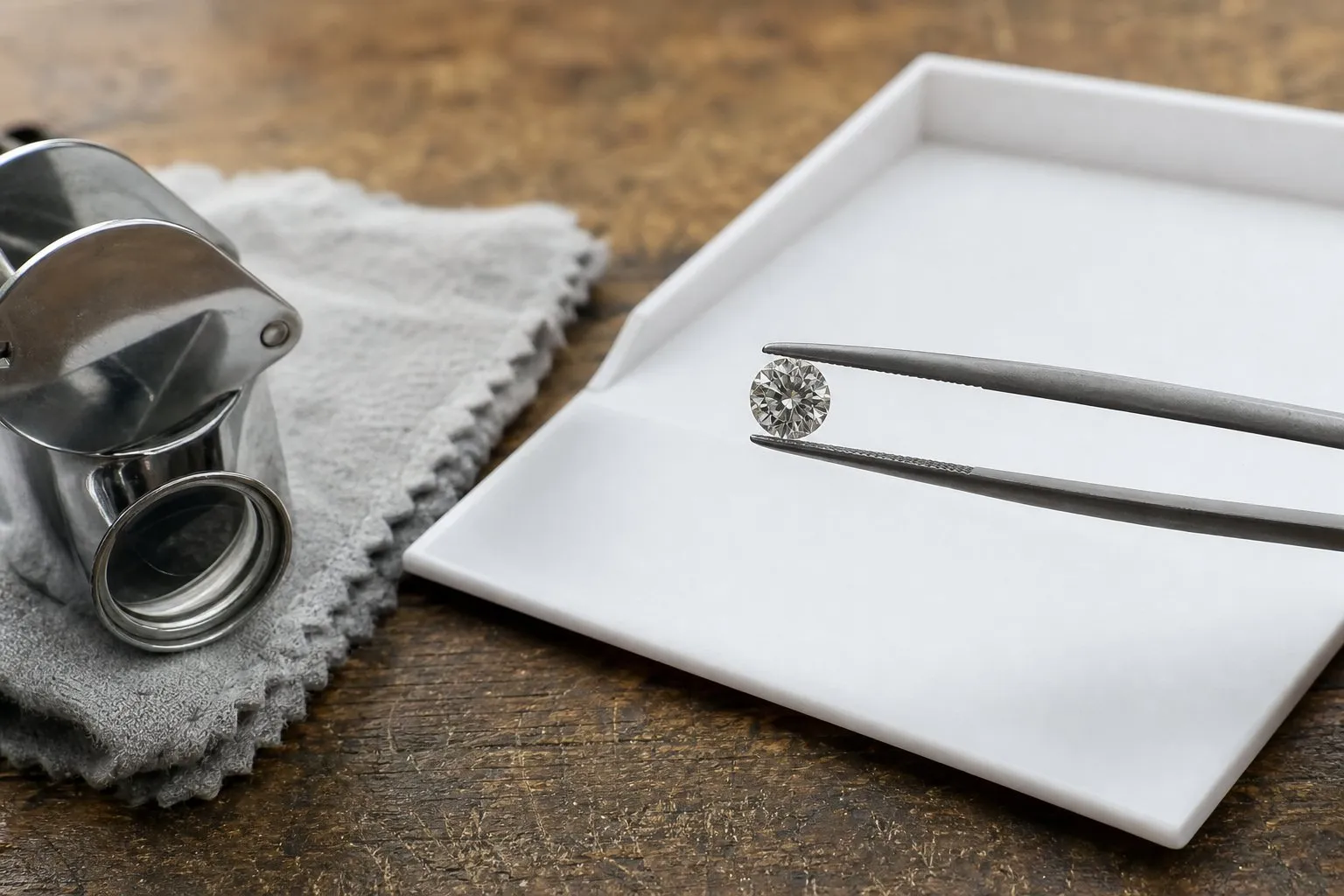
One fixed amount buys very different rings depending on four choices. Nothing here is a price: each line is a named source’s relative statement about which way the money moves.
Natural, Lab-Grown or Another Stone
Stone origin is the largest single lever. The Knot states that lab-grown diamonds can cost 50% to 70% less than natural ones, a relative figure and not a dollar amount. GIA states that moissanite costs much less than a comparable diamond, and that cubic zirconia often costs less than 5% of one. See how lab-grown and natural diamonds compare and moissanite next to a diamond.
Carat Weight and the Quarter-Carat Jumps
GIA defines a metric carat as 200 milligrams and is explicit that the value and quality of a diamond reflects all 4Cs and not just carat weight. The Knot adds that the price increases significantly at every quarter carat after reaching a carat, so a 1.8 carat stone costs significantly less than a 2 carat one, with no multiplier attached. See what a diamond costs at each carat weight.
Shape
Shape moves the price at the same weight. GIA states that ovals are typically more affordable than round brilliants of the same carat weight, and that princess, radiant, cushion and heart cuts cost less per carat than rounds. GIA attaches no percentage to that, so none is given here. See every diamond shape compared.
The Band and the Setting
The metal and the small stones around the center stone take their own share. The Knot quotes James Allen’s chief marketing officer framing the choice as a simple band that will be cheaper against something with a lot of smaller diamonds that will take more of your budget. The Knot adds that cut is usually the most important of the 4Cs, and that hints of color are hard to detect with an untrained eye in yellow gold.
The Costs That Are Not the Ring
No calculator counts these, and they arrive whether or not they were planned for. Every figure below is a named seller’s published price for its own service, or a named survey, with its year.
Resizing, and the Rings That Cannot Be Resized
Brilliant Earth states in 2026 that resizing a ring costs on average $50 to $200 and generally takes up to two weeks. It also states that rings in tungsten, ceramic or titanium may not be fully resizable because of their hardness or strength, and that eternity bands with stones all around can be difficult or impossible to resize without compromising the design.
Soldering the Two Rings Together
Soldering joins the engagement ring and the wedding band into a single piece. Brilliant Earth puts that at $185 to $200 in 2026, depending on ring material, design complexity and the jeweler’s expertise, and states that soldered rings cannot be worn individually. Separating them later means a jeweler cutting the solder joint and refinishing the rings, which may leave slight marks.
Two Wedding Bands
An engagement ring is usually followed by two bands, and the one published average we hold is old. National Jeweler, reporting The Knot’s 2019 Jewelry and Engagement Study in 2019, put the average men’s band at $510 and the average women’s band at $1,100, with tungsten at 23 percent and white gold at 21 percent of men’s bands. We hold nothing newer. See a wedding band built for work.
Who Pays for the Wedding Rings
No named, dated survey publishes who actually pays for the bands. The Knot’s own page on who buys them is written as etiquette rather than as survey data, and the four jewelers’ pages ranking beside it assert a tradition with nothing measured behind it. None of that is a rule anyone owes. The one dated figure we hold measures something else: The Knot’s 2024 study found nearly four in five people being proposed to were involved in selecting or purchasing the ring.
Custom Work, Insurance and What You Cannot Return
Custom has a floor and a catch. Brilliant Earth states in 2026 that custom designs begin at $2,000, while CustomMade states in 2026 that most custom rings start at $1,200. Staghead Designs makes every custom ring final sale and counts a change to band width or an added engraving as custom, while RockHer gives made-to-order rings a 40 day return window: final sale is a seller’s choice, not a rule. On insurance, GEICO’s page, read on 12 September 2026, says to expect 1% to 2% of the ring’s value each year. See what custom work actually involves.
| Line item | What the source publishes | Source, and its date |
|---|---|---|
| Resizing | $50 to $200 on average, generally up to two weeks | Brilliant Earth, 2026 |
| Rings that may not resize at all | Tungsten, ceramic and titanium may not be fully resizable; eternity bands can be difficult or impossible | Brilliant Earth, 2026 |
| Soldering the two rings together | $185 to $200, depending on material, design and the jeweler | Brilliant Earth, 2026 |
| Men’s wedding band | $510 on average | National Jeweler, reporting The Knot 2019 Jewelry and Engagement Study, 2019 |
| Women’s wedding band | $1,100 on average | National Jeweler, reporting The Knot 2019 Jewelry and Engagement Study, 2019 |
| Who pays for the bands | Not publisheddated survey publishes it; The Knot’s page is written as etiquette, and rachelallan.com, moodysjewelry.com, hiholden.com and bluenile.com each assert a tradition instead | The Knot, and four jewelers’ pages, all read 12 September 2026 |
| A custom ring instead of a stock one | Custom designs begin at $2,000; another maker says most custom rings start at $1,200 | Brilliant Earth, 2026; CustomMade, 2026 |
| Insurance | Expect to pay 1% to 2% of the ring’s value each year | GEICO, read 12 September 2026 |
Setting a Number You Can Actually Pay
Your figure is not the output of a formula: it is what you can pay, tested against the four levers above and the costs that follow the purchase.
| If this is your situation | What the published figures point to | What to check before you pay |
|---|---|---|
| You have a fixed number and want the most visible stone for it | The Knot puts lab-grown at 50% to 70% less than natural, and GIA says ovals cost less than rounds of the same weight | Whether the quote covers the finished ring or only the stone |
| You would have to borrow to reach your number | The Knot’s 2024 study found one in three proposers who buy new rings take on some kind of debt and about one in four used savings | What the payment costs you over the whole term, before the ring is chosen |
| Your number is close to the whole or quarter carat mark | The Knot says price increases significantly at every quarter carat after one carat | The price just under the mark, on the same grades |
| You are choosing a metal that cannot be resized | Brilliant Earth says tungsten, ceramic and titanium may not be fully resizable | The seller’s own exchange window, in writing, before you buy |
| You are ordering a custom or altered ring | Staghead Designs makes every custom ring final sale, while RockHer gives made-to-order rings a 40 day return window | Which of the two your seller is, in its own returns policy |
Read the middle column as description and nothing more: every figure it names appears above with its publisher and its year, and where nothing is published the cell says so. The debt and savings split is what buyers reported, not a plan. No row carries a recommended amount, because nobody publishes one.
Frequently Asked Questions
What is the 3 month ring rule?
It is the claim that an engagement ring should cost around three months’ salary. No survey, regulator or standards body publishes it as guidance, and retailers repeat it most. The Knot, in 2025, traces the idea to De Beers advertising that told buyers to spend one month of their salary, and says of the later version that “it’s just marketing!”.
Where did the 3 month salary for an engagement ring come from?
The documented part is De Beers advertising, in a named and dated account: Edward Jay Epstein’s February 1982 article in The Atlantic, which records the figure moving from one month’s salary to two. For three months we could not verify a primary source. Recent journalism ties it to a De Beers campaign in Japan in the 1970s, and we could not isolate a first-hand source.
Is a ring supposed to be 3 months salary?
No published source says so. There is no rule for what an engagement ring is supposed to cost, and the salary version came out of advertising rather than out of any measurement of what couples do. Brilliant Earth, which sells engagement rings, calls the rule outdated on its own page.
How much should I spend on an engagement ring if I make $100,000 a year?
Nobody publishes a rule that turns a $100,000 income into a ring price, and The Knot’s 2025 guide calls the salary version marketing. What decides your figure is what you can pay from money you hold, what the stone origin buys, and what the ring costs afterwards. The Knot’s 2024 study found one in three proposers who buy new take on debt.
Who usually pays for an engagement ring?
None of the sources on this page publishes who pays. What The Knot’s 2024 study does publish is that nearly four in five individuals being proposed to had some involvement in selecting or purchasing the ring, which makes buyer and wearer harder to separate than the question assumes.
Is $30,000 a lot for an engagement ring?
It sits far above every band The Knot’s 2024 Jewelry and Engagement Study published, and no band there reaches $30,000. That same 2024 study found 64% spend less than $6,000 and 33% less than $3,000, while 8% reported between $10,000 and $14,999 and 5% went over $15,000. Whether that is a lot is your judgment.
Sources
- The Knot, Here’s The Average Engagement Ring Cost in 2025, According to Real Couples, 2025.
- The Knot Worldwide, The Knot Worldwide Unveils 2026 Real Weddings Study, 2026.
- Edward Jay Epstein, The Atlantic, Have You Ever Tried to Sell a Diamond?, February 1982. Quoted passages read 12/09/2026 in two third-party mirrors of the article’s text, a document repository and a blog, because theatlantic.com blocks direct access.
- The Knot, “Who Buys the Wedding Bands?”, read 12/09/2026, cited for framing the question as etiquette rather than as survey data.
- rachelallan.com, moodysjewelry.com, hiholden.com and bluenile.com, wedding-band tradition pages, all read 12/09/2026, each cited as a seller’s assertion of custom.
- Brilliant Earth, What Is the 3-Month Salary Rule?, page dated 5 August 2026.
- GIA 4Cs, Diamond Carat Weight, 2025.
- GIA 4Cs, Guide to Diamond Shapes for Engagement Rings, 2025.
- GIA, Diamond Alternatives: Engagement Rings, undated, accessed 11/09/2026.
- Brilliant Earth, What to Do if Your Ring Is Too Big, 2026.
- Brilliant Earth, Soldered Rings: Pros, Cons, & Alternatives, 2026.
- National Jeweler, The Average Amount Spent on an Engagement Ring Is …, 2019.
- Brilliant Earth, Custom Engagement Rings and Custom Jewelry, 2026.
- CustomMade, How Custom Jewelry Works, 2026.
- Staghead Designs, Policies, 2026.
- RockHer, Custom Engagement Rings, Made to Order in Los Angeles, 2026.
- GEICO, Engagement Ring Insurance: A Complete Guide, undated, read 12/09/2026.