

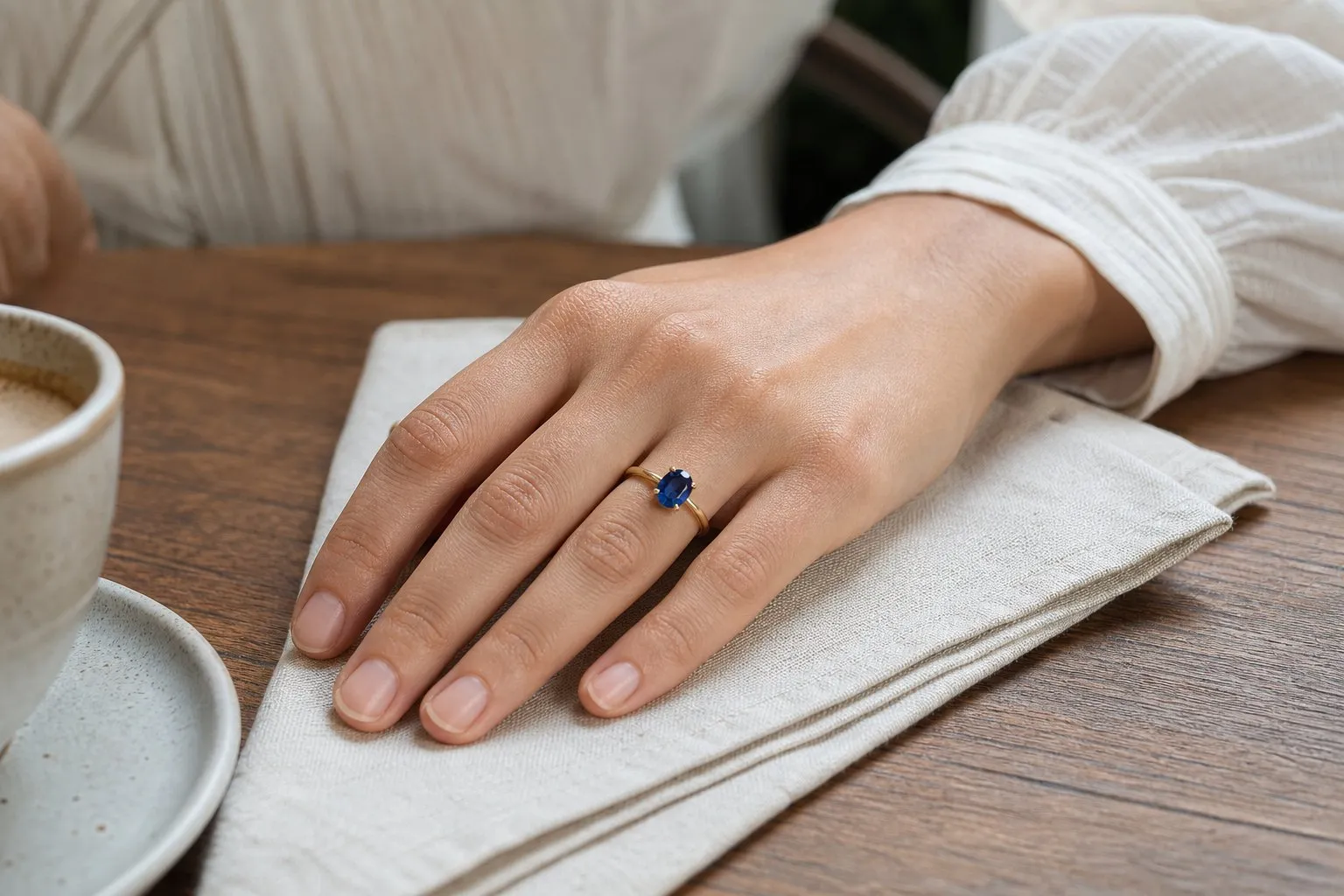
Sapphire engagement rings are sold with two facts that decide what the stone in them is, and product pages print those facts in different places or not at all: whether the sapphire was mined or grown in a laboratory, and whether it was heated. Of the five picks below, read on each seller’s own site on 14 September 2026, three are natural sapphires with a heat treatment written on the listing and two are lab-created stones labeled as such. Our overall pick is Angara’s prong-set oval blue sapphire halo, a natural stone whose page prints its grade, its size and the words “Enhancement: Heated” beside the price. The table below shows what each listing says about its stone.
Our Top Picks
- Our top pickAngara Prong-Set Oval Blue Sapphire Halo Engagement Ring with Diamond Accents
Best overall
A buyer who wants a natural blue sapphire with its grade, size and heat treatment printed on the listing before the price.
- Halo with diamond accents, 14K white gold as the page opens
- $3,806
- Brilliant Earth Lab Grown Sapphire Nadia Lab Diamond Ring in 14K Yellow Gold
Best lab-created
A buyer who wants a larger blue stone for the money and is content with a lab-created sapphire that is labeled as one.
- Round center stone with marquise diamond accents, 14K yellow gold
- $2,900
- Helzberg Scout & Lark Lab-Created Blue Sapphire Toi et Moi Ring in 10K Yellow Gold
Best under $500
A buyer with a budget under $500 who wants a blue stone and a return window, and knows the stone is lab-created.
- Toi et moi design, 10K yellow gold, 4.00mm item width
- $299.99
- Angara Claw-Set Oval Teal Montana Sapphire Cathedral Solitaire Engagement Ring
Best natural under $2,000
A buyer who wants a natural teal sapphire in a plain solitaire, with the treatment printed on the listing.
- Cathedral solitaire with claw prongs, 14K white gold as the page opens
- $1,520
- The Natural Sapphire Company 1.80 Ct. Blue Sapphire and Natural Diamond Antique Style Ring, 18K White Gold
Best for a documented stone
A buyer who wants a natural sapphire with its origin and treatment in writing, and who is paying for the stone first.
- Antique style ring with two natural diamonds, 18K white gold
- $7,400
What is on this page11 sections
Key Takeaways
- Under the FTC Jewelry Guides, the unqualified word “sapphire” belongs to a mined stone. A lab-created one must carry “laboratory-grown”, “laboratory-created” or a word of like meaning immediately before the name, and “faux” does not count (16 CFR 23.25).
- GIA writes that heating “can intensify, or even induce, a blue coloration in sapphires”. On one of its product pages, Angara told a shopper that “Around 99% of all-natural sapphires undergo the standard heat treatment.”
- All three natural picks here state a heat treatment on the listing: Angara as “Enhancement: Heated”, and The Natural Sapphire Company as “Heat Treated”, stone by stone.
- GIA gives sapphire a Mohs hardness of 9 and says the name covers corundum in every color but red.
- GIA says large, high-quality blue sapphires can rival or even exceed diamonds in price, especially rare unheated stones with strong color and clarity.
Sapphire Engagement Rings Compared
Read the center stone and treatment columns first. They carry the two facts a photograph cannot show: what the stone is, and what was done to it. Prices are as each page opened on 14 September 2026, in US dollars, and the last two columns hold each seller’s own terms for sending a ring back and for resizing it.
| Ring | Price range | Center stone, per the listing | Treatment, as the listing states it | Returns, per the seller | Resizing, per the seller |
|---|---|---|---|---|---|
| Angara Prong-Set Oval Blue Sapphire Halo Engagement Ring with Diamond AccentsBest overall | $3,806 | Natural oval blue sapphire, 8x6mm, AAA grade as the page opens | Heated, printed on the listing as "Enhancement: Heated" | 30 days from delivery, with a fully insured free return label | One free ring resizing within the first year of purchase, per Angara's return policy |
| Brilliant Earth Lab Grown Sapphire Nadia Lab Diamond Ring in 14K Yellow GoldBest lab-created | $2,900 | Lab-created round blue sapphire, 8.0 x 8.0 mm, eye clean | Not stated (lab-created stone, origin listed as "Lab Created") | 30 days, in original unworn condition, with shipping covered both ways | One complimentary resizing within 60 days, or up to 1 year if within the ring's sizing range |
| Helzberg Scout & Lark Lab-Created Blue Sapphire Toi et Moi Ring in 10K Yellow GoldBest under $500 | $299.99 | Lab-created blue sapphire, emerald cut | Not stated (lab-created stone, listed as "Stone Type: Lab Created") | 30 days in unworn condition, with a free return label or at any Helzberg store | Not stated as free; the paid Lifetime Care Plan offered on the product page lists ring resizing |
| Angara Claw-Set Oval Teal Montana Sapphire Cathedral Solitaire Engagement RingBest natural under $2,000 | $1,520 | Natural oval teal Montana sapphire, 7x5mm, 0.85 ct, AAA grade | Heated, printed on the listing as "Enhancement: Heated" | 30 days from delivery, with a fully insured free return label | One free ring resizing within the first year of purchase, per Angara's return policy |
| The Natural Sapphire Company 1.80 Ct. Blue Sapphire and Natural Diamond Antique Style Ring, 18K White GoldBest for a documented stone | $7,400 | Natural oval blue sapphire, 1.80 ct, 8.54 x 5.90 x 5.26 mm, origin Ceylon (Sri Lanka) | Heat treated, stated stone by stone (the diamonds "No Enhancement") | 14 days, full refund unless restocking fees are notified before production | Not stated on the product page |
Price ranges from the makers' sites, checked 14 September 2026. Prices change; the maker's site has the current one.
The Best Sapphire Engagement Rings, Reviewed
Best overall
Angara Prong-Set Oval Blue Sapphire Halo Engagement Ring with Diamond Accents
by Angara
Best for: A buyer who wants a natural blue sapphire with its grade, size and heat treatment printed on the listing before the price.
Angara's collection card lists this design at $4,229, and the product page opened at 1.89 carats total weight in 14K white gold at $3,806, the sapphire graded AAA and its heat treatment stated.
What we like
- The gemstone information on the page names the treatment ("Enhancement: Heated"), the grade (AAA), the size and the approximate weight of the sapphire
- Angara sells the same halo design with a lab-grown sapphire, so the natural or lab choice can be priced on two listings from one seller
- Angara's return policy gives 30 days from delivery and one free resize within the first year
Keep in mind
- The page opens on one configuration, and larger stones or higher grades change the price, so the figure you see is a starting point
- Angara will not take back a ring damaged, modified or worn by the buyer, or re-sized or engraved by another jeweler
- Price range
- $3,806 as the page opens (1.89 ct total weight, 14K white gold)
- Material
- Halo with diamond accents, 14K white gold as the page opens
- Guarantee
- Returns within 30 days of delivery; items damaged, modified or worn, or re-sized or engraved by another jeweler, cannot be returned
Best lab-created
Brilliant Earth Lab Grown Sapphire Nadia Lab Diamond Ring in 14K Yellow Gold
by Brilliant Earth
Best for: A buyer who wants a larger blue stone for the money and is content with a lab-created sapphire that is labeled as one.
Brilliant Earth's page opened with an 8.0 mm lab-created sapphire in 14K yellow gold at $2,900, and the same design is offered with 5.5, 6, 7 and 8 mm center stones.
What we like
- The listing says what the stone is twice: "Lab Grown Sapphire" in the name and "Origin: Lab Created" in the gemstone details
- Four center stone sizes on one listing, from 5.5 to 8 mm
- One complimentary resize within 60 days, or up to a year if the new size is within the ring's range
Keep in mind
- Brilliant Earth makes a resized ring final sale, so using the free resize ends the right to return it
- The gemstone details carry no treatment line for the lab-created stone
- Price range
- $2,900 as the page opens (8.0 mm stone, 14K yellow gold)
- Material
- Round center stone with marquise diamond accents, 14K yellow gold
- Guarantee
- Returns within 30 days in original, unworn condition; rings that have been resized or modified are final sale
Best under $500
Helzberg Scout & Lark Lab-Created Blue Sapphire Toi et Moi Ring in 10K Yellow Gold
by Helzberg Diamonds
Best for: A buyer with a budget under $500 who wants a blue stone and a return window, and knows the stone is lab-created.
Helzberg lists this ring at $299.99 among its rings rather than its engagement collection, and names the stone "Lab-Created Blue Sapphire" in the title.
What we like
- The title says "Lab-Created Blue Sapphire", the kind of disclosure the FTC guidance asks for
- 30-day returns in unworn condition, with a free return label or a return at any Helzberg store
- The lowest price on this page by a wide margin
Keep in mind
- Helzberg lists it with its rings, not in its engagement collection, and the page gives no carat weight for the stones
- Free resizing is not stated; ring resizing appears inside a paid care plan offered on the product page
- Price range
- $299.99 as the page opens (10K yellow gold)
- Material
- Toi et moi design, 10K yellow gold, 4.00mm item width
- Guarantee
- Return or exchange within 30 days in unworn condition for a refund
Best natural under $2,000
Angara Claw-Set Oval Teal Montana Sapphire Cathedral Solitaire Engagement Ring
by Angara
Best for: A buyer who wants a natural teal sapphire in a plain solitaire, with the treatment printed on the listing.
Angara's product page opened at 0.85 carat in 14K white gold at $1,520, shown as 10% off a $1,689 list price, with a 0.60 carat option below it.
What we like
- The gemstone information states the treatment ("Enhancement: Heated"), the size, the weight and the grade (AAA)
- A solitaire with nothing competing with the center stone, raised in a cathedral setting
- Angara answered a shopper on this listing that the design is also offered with a pink or a blue sapphire
Keep in mind
- At 0.85 carat the stone is small, and the only other size offered is smaller, at 0.60 carat
- The price on the page was a sale price, 10% off the list price, and may not last
- Price range
- $1,520 as the page opens (0.85 ct, 14K white gold); list price $1,689
- Material
- Cathedral solitaire with claw prongs, 14K white gold as the page opens
- Guarantee
- Returns within 30 days of delivery; items damaged, modified or worn, or re-sized or engraved by another jeweler, cannot be returned
Best for a documented stone
The Natural Sapphire Company 1.80 Ct. Blue Sapphire and Natural Diamond Antique Style Ring, 18K White Gold
by The Natural Sapphire Company
Best for: A buyer who wants a natural sapphire with its origin and treatment in writing, and who is paying for the stone first.
The Natural Sapphire Company lists this one-of-a-kind ring at $7,400, with the sapphire's origin, measurements, clarity grade, color intensity and treatment written into the listing.
What we like
- Every stone gets its own line: the sapphire "Heat Treated" from Ceylon (Sri Lanka), the diamonds "No Enhancement"
- The description gives the sapphire's measurements, its clarity grade and its color intensity
- The seller states that its sapphires are all natural and never lab-created
Keep in mind
- A 14-day return window, the shortest on this page
- The price is for one specific ring, and the product page states no free resize
- Price range
- $7,400 (one specific ring, as listed)
- Material
- Antique style ring with two natural diamonds, 18K white gold
- Guarantee
- A 14-day return window, refunded in full unless a restocking fee is notified before production
How We Chose
- Every listing opened on the seller’s own site on 14 September 2026, with prices in US dollars as the page showed them; Angara was read through its US store.
- A natural and a lab-created sapphire at more than one budget, plus one listing from a seller that documents origin and treatment for each stone.
- Every stone fact copied from the listing: natural or lab-created, the treatment line, the size or weight, and the metal the page opened in.
- Return and resizing terms quoted from each seller’s own policy or product page, and a term we could not find is written as not stated.
- No star ratings, no review counts and nothing about how a ring feels on the hand, because we did not buy or wear these rings.
What the Listing Tells You About the Stone
Every organic result on the first page for this search was a shop collection, and a collection card shows a photograph, a name and a price. What the sapphire actually is sits one click deeper, on the product page, and US guidance expects it to be there.
Natural or Lab-Created: The Word Before “Sapphire”
The FTC Jewelry Guides treat the bare word “sapphire” as a promise that the stone was mined. Section 23.25 calls it unfair or deceptive to use the name for anything that is not “in fact a mined stone of the type described”, and says a laboratory-grown stone may use the name only when a word like “laboratory-created” comes immediately before it, with equal conspicuousness. The same section adds that “faux” is not adequate disclosure.
Both lab-created picks on this page follow the rule in their titles. Brilliant Earth names its ring “Lab Grown Sapphire Nadia” and lists the origin as “Lab Created”. Helzberg calls its ring a “Lab-Created Blue Sapphire” toi et moi. A lab-created sapphire is not an imitation: GIA describes synthetic gems as having “essentially the same chemical, physical, and optical properties” as the natural stone while being grown in a laboratory, and it notes that synthetic sapphire is used for the windows of supermarket scanners and spacecraft.
Section 23.25 also closes one door completely. A product made with gemstone material and “any amount of filler or binder, such as lead glass” may not be sold as a “sapphire”, a “treated sapphire” or a “lab-created sapphire” unless the seller says clearly that it lacks the named stone’s characteristics and needs special care.
Heat Treatment: What Each Listing Printed
Heating is the treatment a natural sapphire buyer meets most. GIA writes that heating “can intensify, or even induce, a blue coloration in sapphires”, can remove the fine needle inclusions gemologists call silk so the stone looks more transparent, and turned pale sapphires “that were once discarded in the mining process” into desirable blue. GIA’s view of disclosure is blunt: it is “necessary and legally required for anyone selling a gem” to disclose the treatment the stone received. The FTC’s section 23.24 asks for disclosure when a treatment is not permanent, creates special care needs or significantly affects value, and for a product bought online it expects the disclosure in the product’s description.
| Seller | Listing we read | What the page printed about treatment |
|---|---|---|
| Angara | Natural oval blue sapphire halo | “Enhancement: Heated”, in the gemstone information |
| Angara | Natural teal Montana sapphire solitaire | “Enhancement: Heated”, in the gemstone information |
| The Natural Sapphire Company | 1.80 carat Ceylon blue sapphire ring | “Heat Treated” for the sapphire and “No Enhancement” for each diamond |
| Brilliant Earth | Two natural teal Montana sapphire rings, Nadia and Elsie | “Treatment: View”, and the page’s own note on the word Treatment described aquamarines |
| Brilliant Earth | Lab grown sapphire Nadia | “Origin: Lab Created”, with no treatment line |
| Helzberg | Lab-created blue sapphire toi et moi | “Stone Type: Lab Created”, with no treatment line |
Brilliant Earth’s natural sapphire listings were the ones that left the question open. On both natural Montana sapphire rings we opened, the center stone’s treatment line read only “View”, and the explanatory note the page attaches to the word Treatment began “Many aquamarines are heated in a controlled environment”. That reads like a template shared across gemstones; it is not a statement about the sapphire in the ring. Brilliant Earth is not a pick here for its natural stones, and a buyer interested in one should ask for the treatment in writing before paying.
Diffusion: Why “Heated” Is Not the Only Question
GIA describes a second treatment that shares the furnace. In 2003, very strongly colored sapphires reached the market, and the cause turned out to be diffusion of beryllium, which can travel all the way through a sapphire during heating and change its color. GIA writes that “Diffusion treated corundum is widespread in the trade”, considers the result permanent with no special care, and says it is extremely difficult to detect with certainty, in many cases only by qualified laboratories. None of the listings we read named diffusion either way. For a natural stone at the top of your budget, the useful question for the seller is whether the sapphire comes with a laboratory report that names its treatment.
Choosing the Color
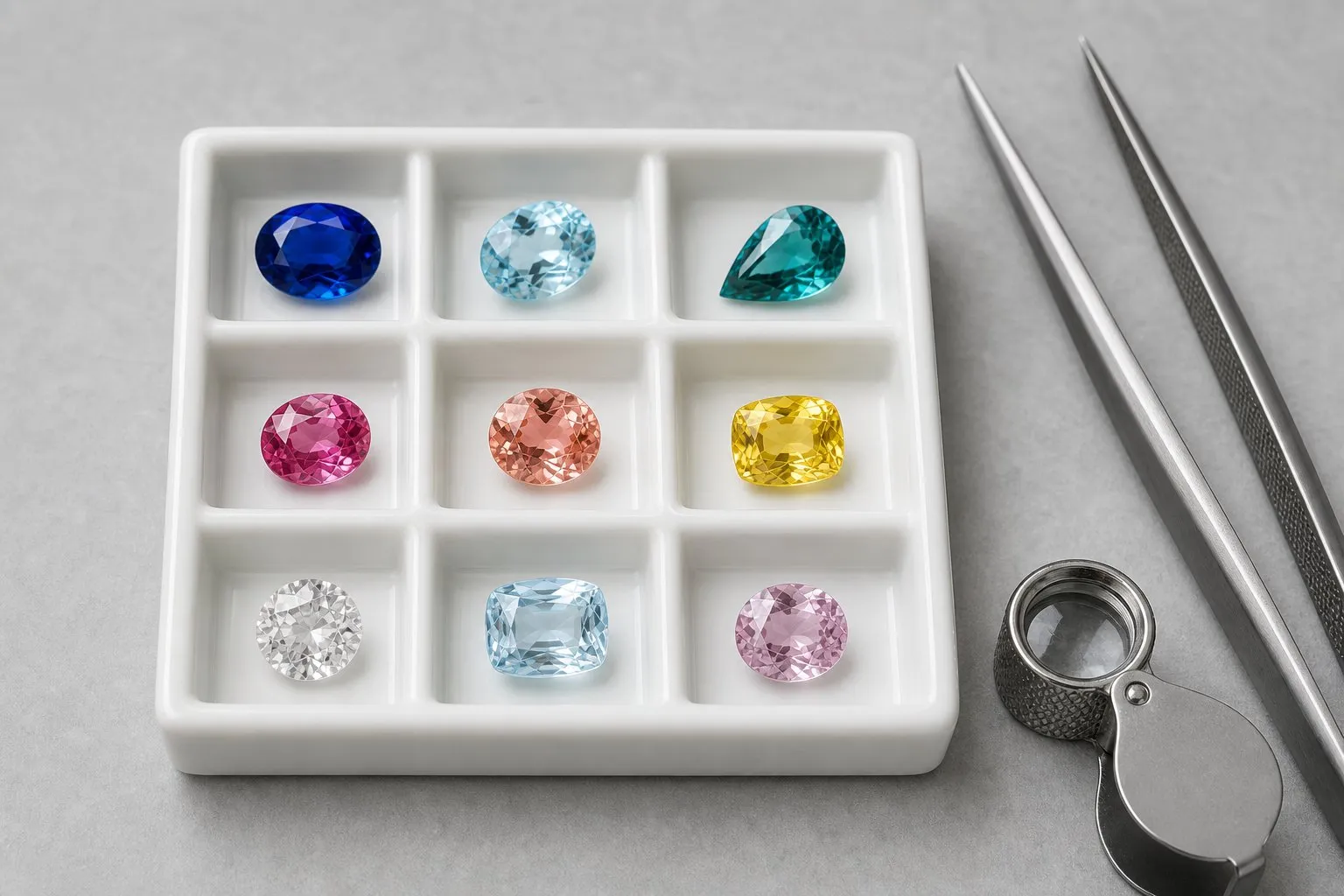
GIA’s gem encyclopedia is clear that the name reaches well past blue: “sapphire” can apply to any corundum that is not ruby red, and the fancy sapphires come in violet, green, yellow, orange, pink, purple and the hues between. Some even change color with the light, most often from blue in daylight to purple under incandescent bulbs.
Blue
Blue is the classic, and GIA calls Kate Middleton’s and Princess Diana’s sapphire “The world’s most famous engagement ring”. Angara names one of its designs after it, and that listing is sold with a natural or a lab-grown center. On size, GIA says most commercial-quality blue sapphires weigh less than 5.00 carats, and that size changes the price of fine-quality sapphire more than it does for commercial grades.
Teal and Montana
Teal is the color the Montana listings on this page share. Angara’s pick is sold as a teal Montana sapphire and states “Enhancement: Heated”; Brilliant Earth lists the origin of its teal stones as Montana. Teal is a seller’s color name rather than one of GIA’s categories, so read the photograph and the stated color together.
Pink, Padparadscha and Other Fancy Colors
GIA’s 4Cs site says fancy color sapphires, aside from padparadscha, are typically more affordable than blue sapphires and diamonds. Padparadscha, a pinkish orange to orange-pink stone named for the lotus blossom, sits at the other end of the scale. Angara’s collection includes pink sapphire designs, and its answer on the Montana listing says that ring is also offered with a pink sapphire.
White Sapphire
Colorless sapphire, which the trade often calls white sapphire, is the same mineral as the blue and pink stones, and GIA lists it among the natural diamond alternatives. It is a different buying decision from a colored stone, compared stone by stone with moissanite and cubic zirconia in our guide to diamond alternatives and in moissanite vs diamond.
What Moves the Price
GIA’s quality factors put it plainly: “Color has the greatest influence on a sapphire’s value.” Beyond color, the listings on this page show three things that move the figure. Natural costs more than lab-created in the same design at Angara, whose Princess Diana inspired halo opened at a smaller carat weight and a higher price with a natural sapphire than its lab-grown twin. Size moves it, which is why every page here opens on one stated configuration. And a stone sold as unheated is its own tier, which is why GIA singles out rare unheated blues as the ones that can outprice a diamond.
How a Sapphire Wears Every Day
A sapphire is chosen for daily wear more often than most colored stones, and GIA’s figures are the reason.
Hardness
GIA gives sapphire a Mohs hardness of 9, and its 4Cs site calls it “one of the hardest gemstones available behind only diamond and moissanite”, adding that it resists scratching. GIA defines the Mohs scale as how resistant gems are to being scratched by one another, so the number describes scratching; the setting still does the work of protecting a stone worn every day.
The Setting Around the Stone
The picks cover three common builds: a halo of small diamonds around the center, a solitaire raised in a cathedral setting, and a toi et moi that sets two stones side by side. Each asks something different of daily wear, and our guide to engagement ring settings sets out what GIA publishes for each.
Cleaning
GIA’s treatment guide lists no special care for diffusion treated corundum. A filled stone is the exception, and under section 23.25 its seller has to disclose the special care it needs. For the routine, see how to clean an engagement ring, which covers colored stones by hardness.
Returns and Resizing, Seller by Seller
Every seller here publishes a return window, and they differ more than the prices do. The clause most buyers meet is the one that ties resizing to returns.
| Seller | Return window, in its words | What ends the right to return | Resizing |
|---|---|---|---|
| Angara | “Return or exchange pieces within 30 days of delivery” | Items “Damaged, modified or already worn by you”, and rings “Repaired, re-sized or engraved by another jeweler" | "Angara offers one free ring resizing within the first year of purchase” |
| Brilliant Earth | “simply return or exchange it within 30 days" | "Rings that have been resized or modified” are final sale | “one complimentary resizing within 60 days regardless of sizing range, or up to 1 year if within sizing range” |
| Helzberg | “return or exchange it within 30 days in unworn condition” | A worn ring | Not stated as free on the product page; a paid care plan offered there lists ring resizing |
| The Natural Sapphire Company | “a 14 day return window to review our sapphires, jewelry or your one-of-a-kind custom sapphire jewelry” | Nothing stated beyond a possible restocking fee, notified “before the start of production” | Not stated on the product page |
The Clause That Ties Resizing to Returns
Brilliant Earth advertises free returns and a free resize together, and its policy makes a resized ring final sale, so the second ends the first. Angara words its list differently: it excludes items modified by the buyer and work by another jeweler, and the text we read does not say whether its own free resize counts as a modification. The Natural Sapphire Company gives the shortest window on this page, fourteen days, less than half of what the other three allow. The safe order is the same everywhere: be sure of the ring first, resize second. What a resize costs when it is not free is in our guide to ring resizing costs.
Which Sapphire Engagement Ring Fits You?
Work down the left column until a row matches you. Every row traces to a listing, a seller’s policy, GIA or the FTC guidance.
| Your situation | What to look for | Why |
|---|---|---|
| You want a natural sapphire and the treatment in writing | A listing with a treatment line, like the two Angara picks or The Natural Sapphire Company | FTC section 23.24 expects treatment disclosure in an online product’s description |
| You want the biggest blue stone for the money | A lab-created sapphire, labeled as one | Brilliant Earth’s lab-created Nadia opened with an 8.0 mm stone |
| Your budget is under $500 | Helzberg’s lab-created toi et moi | The only pick on this page below that line |
| You want an unheated natural stone | A seller that lists treatment stone by stone, and a laboratory report | GIA: diffusion is hard to detect without a laboratory |
| You want a color other than blue | Teal, pink or another fancy sapphire | GIA’s 4Cs site: fancy colors other than padparadscha typically cost less than blue |
| You are unsure of the ring size | Resize only once you are sure of the ring | Brilliant Earth makes a resized ring final sale |
| You want a matching band from the same seller | A bridal set | Angara sells a lab-grown sapphire set, compared in bridal sets |
Frequently Asked Questions
Is Sapphire Good for an Engagement Ring?
Yes, for most people who want color. GIA rates sapphire 9 on the Mohs scale and calls it ideal for everyday wear, especially in engagement rings. Whether a particular sapphire is good is answered on its listing: mined or lab-created, heated or not, and how large the stone is for the price asked.
How Much Should a Sapphire Engagement Ring Cost?
On the listings we read in September 2026, from under $300 for Helzberg’s lab-created toi et moi to over $7,000 for a 1.80 carat Ceylon sapphire ring. We found no survey that publishes an average for sapphire rings. Color, size, natural or lab origin and whether the stone was heated set where a ring lands in that span.
Which Sapphire Color Is the Rarest?
GIA calls padparadscha, a pinkish orange sapphire, an extremely rare and collectible variety whose value is typically much higher than many other fancy sapphires. Among blues, GIA says the most valued are velvety blue to violetish blue in medium to medium-dark tones, and that rare sapphires from Kashmir set the standard.
Is White Sapphire Good for an Engagement Ring?
It is hard enough for daily wear, at 9 on GIA’s figures, but GIA notes it does not have as much fire or brilliance as a diamond. It suits a buyer who wants a natural colorless stone and a quieter sparkle. Lab-created colorless sapphires are widely available too, at an even lower price, according to GIA.
Are Lab-Created Sapphires Worth Anything?
As a gemstone, yes: GIA says a synthetic has essentially the same physical and optical properties as the mined stone, so it wears the same way. We found no source that publishes resale values for lab-created sapphire, so buy one for the ring you want to wear rather than as something to sell later.
Do Sapphire Engagement Rings Last?
The stone does. GIA calls sapphire one of the hardest gemstones and says it resists scratching, which is why it is worn every day in engagement rings. The exception is a stone made with lead glass or other filler, which the FTC guidance says must be disclosed as needing special care.
Sources
- GIA, Sapphire, Gem Encyclopedia, undated, accessed 14 September 2026.
- GIA, Sapphire Quality Factors, undated, accessed 14 September 2026.
- GIA, An Introduction to Gem Treatments, Robert Weldon, undated, accessed 14 September 2026.
- GIA 4Cs, Diamond Alternatives: Engagement Rings, undated, accessed 14 September 2026.
- Federal Trade Commission, 16 CFR 23.24, Disclosure of treatments to gemstones, eCFR, current as of 14 September 2026.
- Federal Trade Commission, 16 CFR 23.25, Misuse of the words “ruby,” “sapphire,” “emerald,” and others, eCFR, current as of 14 September 2026.
- Angara, Prong-Set Oval Blue Sapphire Halo Engagement Ring with Diamond Accents (retailer), undated, accessed 14 September 2026.
- Angara, Claw-Set Oval Teal Montana Sapphire Cathedral Solitaire Engagement Ring (retailer), undated, accessed 14 September 2026.
- Angara, Princess Diana Inspired Blue Sapphire Engagement Ring with Diamond Halo and its lab-grown version (retailer), undated, accessed 14 September 2026.
- Angara, Sapphire Engagement Rings (retailer), undated, accessed 14 September 2026.
- Angara, Return & Exchange Policy, undated, accessed 14 September 2026.
- Brilliant Earth, Lab Grown Sapphire Nadia Lab Diamond Ring in 14K Yellow Gold (retailer), undated, accessed 14 September 2026.
- Brilliant Earth, Sapphire Nadia Diamond Ring in 14K Yellow Gold and Sapphire Elsie Engraved Ring in 14K Yellow Gold (retailer), undated, accessed 14 September 2026.
- Brilliant Earth, Free 30-Day Returns & 1-Year Resizes, 2026.
- Helzberg Diamonds, Scout & Lark Lab-Created Blue Sapphire Toi et Moi Ring in 10K Yellow Gold (retailer), undated, accessed 14 September 2026.
- The Natural Sapphire Company, 1.80 Ct. Blue Sapphire and Natural Diamond Antique Style Ring, 18K White Gold (retailer), undated, accessed 14 September 2026.